SARATH SANGA
Yale Law School

Sarath Sanga

Professor of Law  ·  Co-Director, Center for the Study of Corporate Law

I study contracts, corporations, and the rules people make to govern themselves.
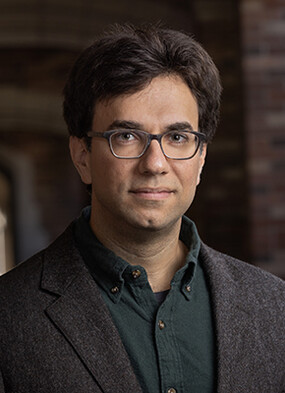
Sarath Sanga
02

About me

I specialize in contracts and governance: how people and organizations structure their relationships and set their own rules. My research has explored how shareholder agreements are reshaping corporate governance, demonstrating how the subtle design of corporate altering rules can fundamentally shift power and control of corporations. I've also investigated the logic behind venture-capital contracts, showing how these documents solve (or exacerbate) complex fiduciary conflicts in startups. Another strand examines how firms select governing laws for their contracts and their corporations, and why some states — like Delaware and New York — dominate the landscape through powerful network effects.

My work also addresses how contracts strategically omit terms to achieve outcomes that explicit terms can't. For example, companies craft intentionally incomplete employment agreements to enforce noncompete clauses precisely where the law forbids them. And I've proposed fresh regulatory strategies to rebalance state, federal, and individual interests in arbitration.

More recently I've turned to institutions themselves — why they earn public trust and why they lose it — as a member of the Yale Committee on Trust in Higher Education. I co-founded SCALES, a project harnessing AI to make federal court records freely accessible. Prior to joining Yale, I held permanent and visiting positions at Harvard, Stanford, Northwestern, the University of Chicago, Columbia, and the University of California, Berkeley.

03

Research

Filter by subject

Law Professors Prefer AI Over Peer Answers

Working paper · 2026 · with Salinas, Nyarko & others
In blind evaluations, law professors tended to rate AI-written answers to legal questions above those written by their peers.

A Theory of Trust in Institutions

Working paper · 2026 · with Yehonatan Givati
Institutions earn trust by committing to a mandate; as they grow influential, the pull toward off-mandate aims — "elite drift" — erodes it.

Occupational Licensing and Labor Market Mobility: Evidence from the Legal Profession

R&R, AEJ: Applied Economics · with Chilton, Goldin & Rozema
Licensing requirements sharply reduce mobility in the legal profession — but may raise the quality of legal services.
Coverage: Jotwell

Altering Rules: The New Frontier for Corporate Governance

Yale Journal on Regulation · 42:291–331 · 2025 · with Gabriel V. Rauterberg
Shareholder agreements are transforming corporate governance. We build a framework to guide courts — what matters is not just whether a rule is contractible, but how.
Coverage: Jotwell

Racial Diversity and Affirmative Action in American Law Schools

Journal of Law & Economics · 68:711–754 · 2025 · with Brooks & Rozema
State-level affirmative action bans reduced racial diversity at U.S. law schools by 17 percent — the entire decline coming from fewer Black and Hispanic students.

Don't Go Chasing Waterfalls: Fiduciary Duties in Venture Capital Backed Startups

Journal of Legal Studies · 53:21–65 · 2024 · with Eric Talley
VC-backed companies suffer a fundamental fiduciary conflict. We model it to derive the optimal contractual solution.

The SCALES Project: Making Federal Court Records Free

Northwestern University Law Review · 119:23–64 · 2024
The government charges to view public court records. We bought them in bulk, organized them with AI, and released them free.

Women in U.S. Law Schools, 1948–2021

Journal of Legal Analysis · 15(1):48–78 · 2023 · with Katz & Rozema
Hand-collected data from every U.S. law school, tracing 70 years of women's progress.
Coverage: ABA Journal

The Origins of the Market for Corporate Law

American Law & Economics Review · 24:369–406 · 2022
The popular story — that Delaware rose only because New Jersey repealed its statute in 1913 — is false.
Coverage: Jotwell

The Promise of AI in an Open Justice System

AI Magazine · 43:69–74 · 2022
A how-to for building AI systems that analyze court records.

A Statistical Test for Legal Interpretation: Theory and Applications

Journal of Law, Economics & Organization · 38:539–569 · 2022 · with Julian Nyarko
Many questions of legal interpretation turn on whether two groups assign different meanings to the same word. We build a test for it.

The Impact of the Coronavirus Lockdown on Domestic Violence

American Law & Economics Review · 23:137–163 · 2021 · with Justin McCrary
911 calls surged during lockdown — the biggest increase during working hours, with even higher rates of first-time abuse.

How to Build a More Open Justice System

Science · 369(6500):134–136 · 2020
Court records are unstructured and costly to access. Here's how to fix it.

Network Effects in Corporate Governance

Journal of Law & Economics · 63:1–41 · 2020 · lead article
The trend toward Delaware incorporation is driven by network effects.

A New Strategy for Regulating Arbitration

Northwestern University Law Review · 113(5):1121–1162 · 2019
The Supreme Court's arbitration jurisprudence is a mess; states should adopt a new strategy for regulating it.

Incomplete Contracts: An Empirical Approach

Journal of Law, Economics & Organization · 34:650–679 · 2018
Theoretical predictions of optimal incompleteness are confirmed in real-world employment contracts.

A Theory of Corporate Joint Ventures

California Law Review · 106(5):1437–1475 · 2018
Corporations use contracts and third-party entities to collaborate and resolve fiduciary conflicts.

The Private Ordering Solution to Multiforum Shareholder Litigation

Journal of Empirical Legal Studies · 14:31–78 · 2017 · with Roberta Romano
Law firms — not corporations — are the principal drivers of legal innovation in corporate charter design.

Choice of Law: An Empirical Analysis

Journal of Empirical Legal Studies · 11:894–928 · 2014
Contract parties are increasingly choosing New York law and abandoning all other states. Why?

Does Officer Race Matter?

American Law & Economics Review · 16:403–432 · 2014
The neighborhood where a suspect is stopped may matter more than anything else.

General Equilibrium Effects of Prison on Crime: Evidence from International Comparisons

Cato Papers on Public Policy · 2:165–206 · 2012 · with Justin McCrary
The five-fold rise in U.S. incarceration has had no effect on public safety, at least relative to the rest of the world.

Is Credit Access Effective in Mitigating Damages Caused by a Natural Disaster?

Keizai Kenkyu · 62(2):129–140 · with Sawada & Shoji · in Japanese
After a disaster, cheap credit lets victims repair property and income-producing assets.

Reconsidering Racial Bias in Motor Vehicle Searches

Journal of Political Economy · 117:1155–1159 · 2009 · comment
Police in Maryland search too many Black and Latino drivers.
04

Press and shorter pieces

Digging a Hole: The Legal Theory Podcast · Ep. 80 · June 2026
College Uncovered · GBH News / NPR × The Hechinger Report · June 2026
Quillette Podcast · host Jonathan Kay · May 2026
The Wall Street Journal · Op-ed · 2026
University of Chicago Law Review · March 2026
Harvard Forum on Corporate Governance · February 2025 · with G. Rauterberg
Columbia Blue Sky Blog · February 2025 · with E. Talley & G. Rauterberg
The Wall Street Journal · Op-ed · December 2020 · with D. Schwartz
Harvard Forum on Corporate Governance · January 2018
05

For students

I teach contracts and corporate law at Yale Law School, and a law and economics course at Yale College — ECON S2276, Law and Economics of the International Commercial Order, in the Yale Study Abroad program in Paris.

If you're a student in the College or the Law School and curious about law, economics, research, your own career, or anything else, reach out. Put STUDENT REQUEST in the subject line and you'll get my priority attention.